
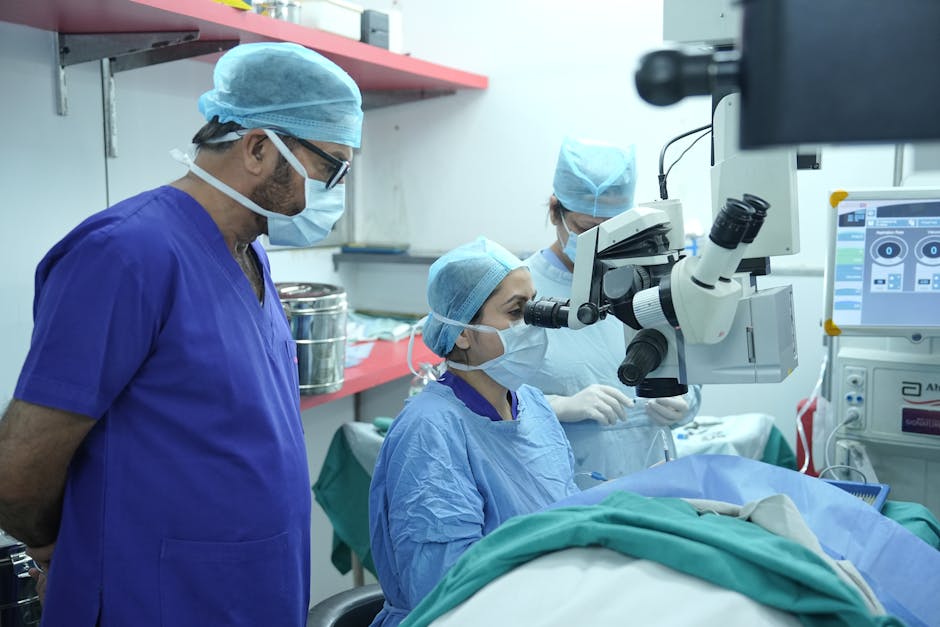
 Photo from Pexels
Originally Posted On: https://bluefinvision.com/blog/surgically-induced-astigmatism-how-incision-size-and-position-affect-your-vision/
In the realm of vision correction, whether through refractive surgery, cataract surgery or lens replacement surgery, one important factor that can subtly influence your visual outcome is surgically induced astigmatism (SIA). This occurs when the surgical incision itself changes the shape of the cornea, affecting how light enters the eye and consequently impacting your vision’s clarity and quality.
At Blue Fin Vision®, as a top private eye clinic serving London, Chelmsford, and Hatfield, our leading surgeons and top specialists take every step to minimise SIA, tailoring incision size and placement to your individual eye anatomy and visual goals.
What Is Surgically Induced Astigmatism?
Astigmatism arises when the cornea or lens isn’t perfectly spherical, causing blurry or distorted vision. Surgically induced astigmatism occurs when an incision made during surgery alters the corneal curvature, usually by flattening the cornea along the incision meridian. This change can either exacerbate or, occasionally, reduce pre-existing astigmatism.
Understanding and controlling SIA is critical during procedures like cataract surgery or refractive lens exchange because even minor changes in corneal shape can influence your postoperative prescription and visual quality.
How Incision Size Affects Astigmatism
Incision size plays a pivotal role in the degree of astigmatism induced by surgery. Larger incisions tend to cause more corneal flattening along the incision axis, and a more pronounced astigmatic effect. For example:
- Incisions larger than 6 mm, often used in older extracapsular cataract surgery techniques, produce significant SIA.
- More modern, minimally invasive surgery uses small incisions between 1.8 mm and 3.0 mm, which greatly reduce astigmatic changes.
- Incisions around 2.2 to 2.4 mm balance surgical access with minimal astigmatic impact, often resulting in astigmatically neutral or very low induced astigmatism.
At Blue Fin Vision®, we use the latest microincisional techniques tailored to minimise any unwanted astigmatic effects, helping to preserve or even improve your vision after surgery.
The Importance of Incision Position
Not just size, but the exact position of the incision on the cornea critically influences surgically induced astigmatism. The effect depends on how the incision aligns with the cornea’s steepest meridian (the axis of greatest curvature). Key insights include:
- Incisions placed on or near the steepest corneal meridian tend to flatten that axis, which can reduce pre-existing astigmatism and improve vision.
- Temporal incisions (on the side of the cornea closer to the temple) usually induce less astigmatism than superior incisions (towards the top of the cornea).
- Incisions positioned obliquely to the steep meridian may cause torsional changes, altering the axis of astigmatism unpredictably.
Our expert surgeons at Blue Fin Vision® use advanced diagnostics such as corneal topography and precise biometry to select the best incision site tailored to your eye’s unique shape, optimising your visual outcome.
Managing Astigmatism During Surgery
In addition to careful incision planning, Blue Fin Vision® offers techniques to manage astigmatism during surgery:
- Limbal relaxing incisions or micro-incisional corneal cuts can be made strategically to reduce moderate astigmatism at the time of cataract surgery.
- Toric intraocular lenses are another powerful tool for correcting astigmatism in combination with well-planned incisions.
- Our surgeons evaluate all these options and customise your plan to achieve the best possible postoperative vision.
Why Trust Blue Fin Vision®?
Choosing Blue Fin Vision® means choosing a leading private eye clinic staffed by top doctors and leading surgeons with a collective commitment to precision, personalised care, and excellent patient outcomes across London, Chelmsford, and Hatfield. Our consistent use of advanced diagnostic tools and technology, combined with meticulous surgical technique, ensures that the impact of surgically induced astigmatism is minimised while enhancing your vision clarity.
We pride ourselves on transparent communication and careful planning to give you confidence throughout your journey to better vision.
Take the Next Step
If you have concerns about astigmatism and how it may affect your vision correction journey, the expert team at Blue Fin Vision® invites you to book a consultation at your nearest clinic. Whether you are preparing for cataract surgery, lens replacement, or refractive surgery, trust us to deliver tailored solutions that prioritise your unique eyes and lifestyle needs.
Regain crisp, comfortable vision with Blue Fin Vision® – where expertise meets personalised eye care in London, Hertfordshire, and Essex.